The cute-but-unsettling world that helped turn Chiikawa into one of Japan’s biggest cultural phenomena
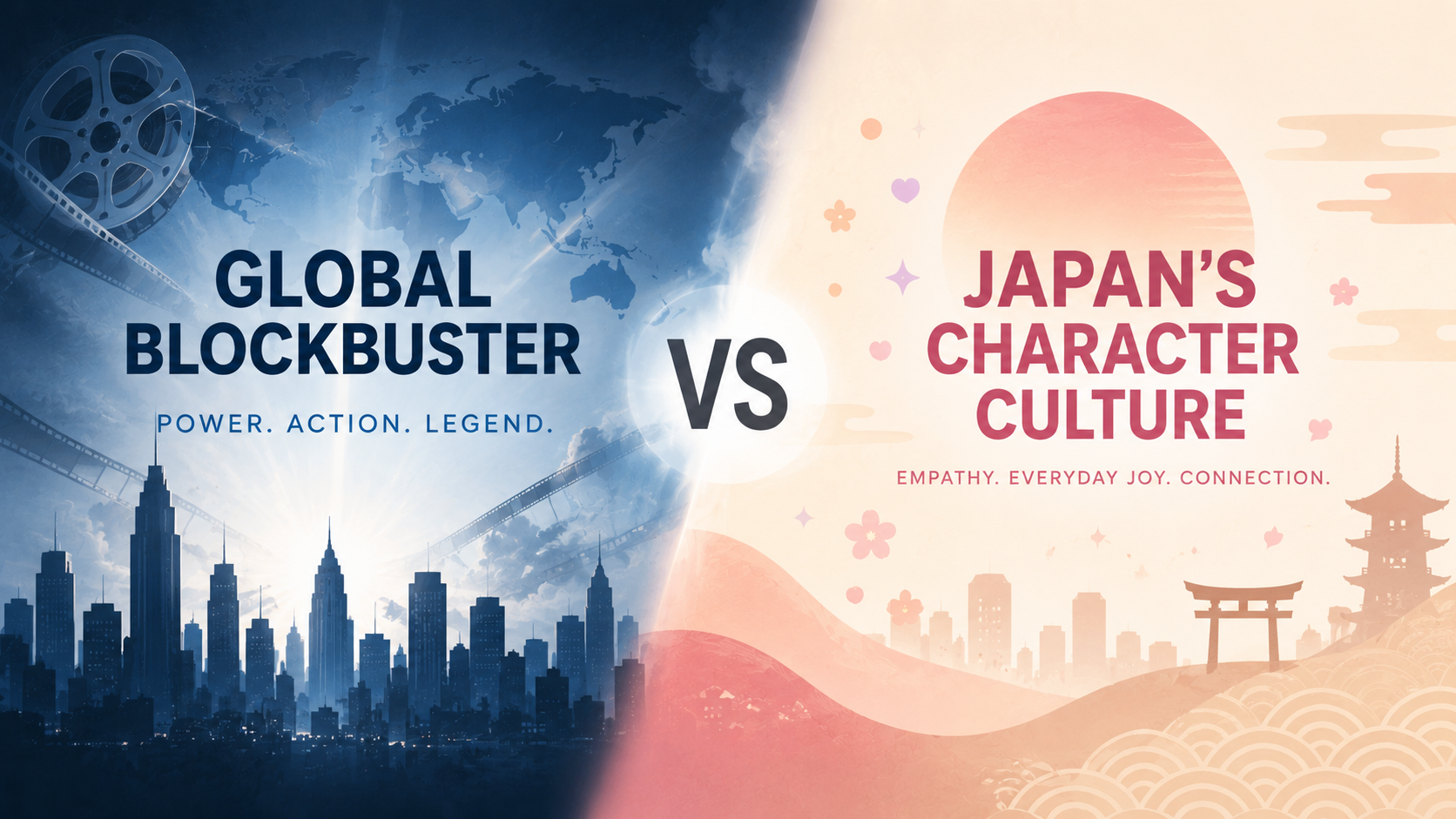
Japan embraced a tiny, anxious creature at the same moment the rest of the world was watching superheroes. The reason may be more complicated than cuteness.
While Spider-Man: Brand New Day has dominated the global box office, Japan’s summer movie season has produced a very different kind of phenomenon.
At the center of it is Chiikawa.
The first feature film based on Nagano’s enormously popular manga and character franchise, Chiikawa the Movie: The Secret of Mermaid Island, became one of Japan’s biggest hits of the summer. After opening in July 2026, the film passed ¥5 billion in just 14 days and reached roughly ¥6.77 billion after 17 days. During the August 7–9 weekend, it returned to No. 1 in Japan, drawing more moviegoers than Spider-Man: Brand New Day.
The comparison is striking.
Spider-Man is one of the world’s most recognizable superheroes: powerful, athletic and capable of saving lives on a spectacular scale.
Chiikawa is small.
He cries.
He panics.
He fails.
And sometimes, surviving the day seems like enough.
So why has Chiikawa become such a powerful cultural force in Japan?
The answer is not simply that the characters are cute.
Chiikawa’s appeal comes from the tension between cuteness and danger, weakness and friendship, absurd comedy and unexpectedly dark storytelling.
It is a world where happiness exists—but never entirely without the possibility that something strange, frightening or unfair is waiting just outside the frame.
A Different Kind of Hero
One reason Chiikawa stands out is that its main character is not built like a conventional hero.
He does not gradually become unstoppable.
He does not always defeat his fears.
Hard work does not guarantee success.
Sometimes he simply cannot do something.
That may sound like a small distinction, but it changes the emotional logic of the series.
In many adventure stories, fear is something the protagonist eventually conquers. In Chiikawa, fear often remains.
The characters still have to live with it.
That creates a surprisingly relatable kind of fantasy.
Real life does not always provide satisfying victories. You can prepare and still fail. You can make a reasonable decision and still encounter something unfair. You can do your best without becoming stronger, richer or more confident overnight.
Chiikawa does not pretend otherwise.
Instead, it gives enormous value to much smaller victories:
- finishing something difficult
- sharing food with friends
- returning safely from danger
- enjoying an ordinary day
- finding a moment of happiness before the next problem arrives
That emotional scale may be one reason the series resonates so strongly.
Chiikawa’s World in One Image
        CUTE & COMFORTING
   ─────────────────────────
     Friendship · Food · Play
     Small daily happiness
                +
                +
                +
        STRANGE & DANGEROUS
   ─────────────────────────
     Monsters · Failure · Fear
     Unfairness · Unanswered questions
                ↓
     ORDINARY HAPPINESS
        BECOMES SPECIAL
This is the key difference.
Chiikawa is not set in a kind world.
Kindness exists inside a world that is often indifferent, unpredictable and occasionally terrifying.
And that makes the peaceful moments matter more.
The World Is Not Gentle. The Characters Often Are.
The contrast between danger and everyday life is central to Chiikawa.
One moment, the characters may be eating something delicious or playing together.
The next, they may encounter a creature that threatens their lives.
The setting has jobs, tests and social rules. There are rewards for completing dangerous tasks. There are creatures whose existence is not fully explained. Characters can fail, transform or disappear.
Even the official description of the franchise has long emphasized that Chiikawa’s stories are not simply cheerful daily-life adventures, but tales containing both fun and occasionally harsh experiences. The film’s Siren arc also became a major talking point precisely because it pushed the series’ darker side into a larger cinematic story.
That combination creates one of Chiikawa’s most distinctive emotional effects.
A peaceful meal is not just decoration.
Friendship is not simply background atmosphere.
In a world where something can go wrong, ordinary happiness feels earned.
This is where Nagano’s storytelling becomes particularly interesting.
Nagano’s World Is Cute—Until You Start Thinking About It
It would be too simplistic to claim that we know Nagano’s personal philosophy or ethical beliefs from the manga alone.
We do not.
But readers can still analyze the worldview that appears in the work.
And Chiikawa repeatedly presents situations in which simple moral categories become uncomfortable.
Who is good?
Who is bad?
Who deserves punishment?
What should happen when someone does something terrible for a reason we can understand?
The series does not always provide clean answers.
That ambiguity became especially visible in the Siren arc, the long story adapted into The Secret of Mermaid Island.
For many viewers, this was the moment when Chiikawa stopped being easy to describe as merely a “cute character franchise.”
It was cute.
It was funny.
And then it became deeply uncomfortable.
Spoiler Warning: The following section discusses major plot points from Chiikawa the Movie: The Secret of Mermaid Island.
The Siren Arc: When There Is No Comfortable Villain
The central mystery of The Secret of Mermaid Island eventually leads to Hitoha and Futaba.
They are connected to the disappearance of a mermaid whose loss drives the Siren’s actions.
But the situation is not as simple as “two villains committed a crime.”
Futaba was critically injured after an accident involving the Sirens. Hitoha then killed a mermaid and used its flesh in an attempt to save Futaba. Later, Futaba shared the same fate with Hitoha rather than allowing one of them to live forever alone.
The result is a chain of decisions in which almost every major action produces another tragedy.
The Siren’s loss is real.
Hitoha and Futaba’s fear is understandable.
The islanders become victims.
And Chiikawa himself eventually faces a truth that the story never turns into a simple moral lesson.
That ambiguity is one reason the arc has generated so much discussion in Japan. Commentary surrounding the story repeatedly returns to the same question: who, exactly, is the villain here?
There is no entirely comfortable answer.
And that may be the point.
A Single Word Changes Meaning: The Siren’s 「わかった」
One of the most effective moments in the Siren arc involves a simple Japanese phrase:
「わかった」
“Wakatta.”
Depending on context, it can mean something like:
- “I understand.”
- “Okay.”
- “I got it.”
At first, the line appears to fit the immediate situation.
But once the audience understands the truth, another interpretation becomes possible.
What if the Siren has just figured out who is responsible?
Japanese viewers have widely interpreted the moment as a piece of delayed storytelling: a line that initially sounds harmless but becomes much darker when the audience understands what happened to the mermaid. Analyses of the film point to the Siren discovering a crucial clue and interpreting 「わかった」 not as surrender, but as realization.
How the Scene Changes on a Second Viewing
① THE SIREN SAYS:
      「わかった」
      "I understand."
          ↓
② FIRST INTERPRETATION
   "The conflict is over."
          ↓
③ NEW INFORMATION
   changes the context
          ↓
④ SECOND INTERPRETATION
   "I understand what happened."
          ↓
   ★ "I know who did it."
This is one of Chiikawa’s most effective storytelling techniques.
The horror is not always in the moment itself.
Sometimes the horror comes later.
You remember something that seemed unimportant.
Then you realize:
It meant something completely different.
The Momonga and Dekatsuyo Theory
Another example of how Chiikawa invites deeper reading is the long-running discussion surrounding Momonga and the creature often nicknamed Dekatsuyo, or “Something Big and Strong.”
Momonga’s appearance is adorable.
His behavior, however, is often unsettlingly different from that of Chiikawa or Hachiware.
Meanwhile, Dekatsuyo is physically frightening—but its presence has led many readers to question whether appearances in Chiikawa can be trusted at all.
This has produced one of the best-known fan theories surrounding the series:
What if Momonga and Dekatsuyo exchanged bodies?
In the theory, the small, cute Momonga may contain the consciousness of the creature that originally occupied Dekatsuyo’s body, while the original Momonga may be trapped elsewhere.
To be clear:
This is a fan interpretation, not an officially confirmed explanation.
But the popularity of the theory reveals something important about Chiikawa.
The Question Behind the Theory
WHAT YOU SEE
🐹  Cute appearance
        ↓
     MOMONGA👹
  Terrifying appearance
        ↓
  DEKATSUYOWHAT FANS ASK
        ↓
"Are these appearances telling us the truth about who they really are?"
Chiikawa repeatedly encourages this kind of discomfort.
Cute does not automatically mean safe.
Scary does not automatically explain someone’s identity.
And sometimes, the audience simply does not have enough information to know what is really happening.
That uncertainty is part of the appeal.
Why Japanese Fans Keep Returning to Chiikawa
Not everyone watches Chiikawa to analyze hidden symbolism.
And they should not have to.
The series is also successful because it works on a much simpler level.
The characters are funny.
Their reactions are memorable.
The food looks good.
Usagi is unpredictable.
Chiikawa and Hachiware’s friendship is easy to understand even without knowing every detail of the world.
But beneath that accessibility is another layer.
Fans can revisit scenes and ask:
- Why did that character react that way?
- Was that line a clue?
- What exactly are the rules of this world?
- Did the story explain everything—or deliberately leave something unresolved?
That flexibility gives Chiikawa an unusual range.
You can enjoy it as a cute comedy.
Or as an unsettling fantasy.
Or as a story about friendship.
Or as a puzzle.
Often, it is all of those things at once.
Why the Contrast With Spider-Man Matters
The comparison with Spider-Man is not meant to suggest that Japanese audiences reject superheroes.
They clearly do not.
Spider-Man: Brand New Day opened strongly in Japan and has been a major global box-office success.
The contrast is interesting for another reason.
Spider-Man represents a familiar modern fantasy:
You may be afraid, but eventually you must rise to the occasion.
Chiikawa offers something different.
You may remain afraid.
You may fail.
You may need help.
You may never become powerful.
And your life can still matter.
That is not a lesser fantasy.
In some ways, it may be a more intimate one.
Chiikawa does not ask the audience to imagine becoming a superhero.
It asks them to recognize the value of getting through an ordinary day.
Why Chiikawa Feels So Japanese—Without Being Only for Japan
It would be dangerous to claim that there is one universal “Japanese mentality” responsible for Chiikawa’s popularity.
Japan is far too diverse for that.
But Chiikawa does connect strongly with experiences that are especially familiar to its Japanese audience:
- pressure to perform
- anxiety about failure
- the importance of small daily routines
- the comfort of belonging to a group
- the fear that effort may not always be rewarded
These themes are not unique to Japan.
That may also explain why Chiikawa has the potential to travel beyond it.
The character designs make the series immediately accessible.
The emotional logic underneath them is more universal.
You do not need to understand every Japanese reference to recognize the feeling of being overwhelmed.
Or the relief of having someone beside you.
Or the happiness of sharing food after a difficult day.
Conclusion: Chiikawa Makes Weakness Feel Worth Watching
The global success of superhero films and the extraordinary success of Chiikawa in Japan do not represent opposite cultures.
People enjoy both.
But Chiikawa demonstrates that audiences do not always need a protagonist who becomes stronger.
Sometimes, a character can remain vulnerable.
Sometimes, the world can remain unfair.
And sometimes, the most meaningful achievement is simply continuing.
That is what makes Chiikawa more than a cute character franchise.
Behind its soft designs is a world filled with danger, strange rules, moral ambiguity and mysteries that may never receive a complete explanation.
The Siren’s 「わかった」 becomes more unsettling after the truth is revealed.
The Momonga and Dekatsuyo theory asks whether appearance and identity can be separated.
And throughout the series, ordinary happiness exists beside the possibility of something deeply strange.
Perhaps that is why Chiikawa has become so difficult to reduce to a single explanation.
It is cute.
It is funny.
It is occasionally frightening.
And underneath all of that is a surprisingly simple idea:
The world does not have to become kind before a small moment of happiness can matter.
In a culture obsessed with becoming stronger, faster and more successful, Chiikawa offers another possibility.
You can be scared.
You can fail.
You can need help.
And tomorrow, you can still sit down with your friends and eat something good.
Sometimes, that is enough.